
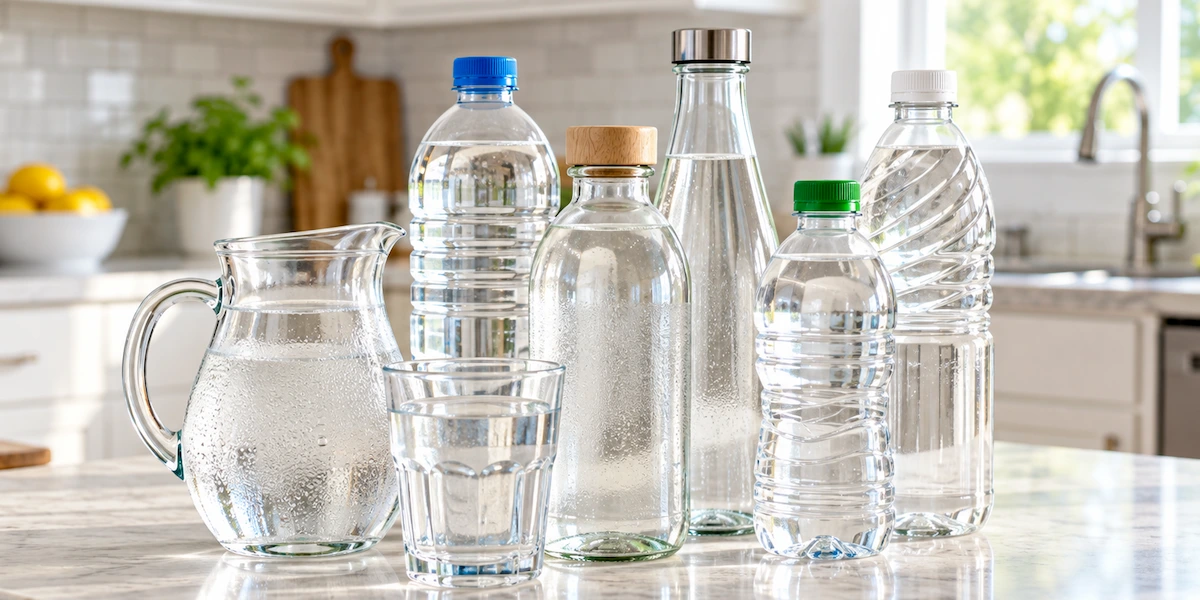
Emergency Water Preparedness: A 3-Layer Plan to Store, Treat and Replenish Water
When most people think about emergency water preparedness, the first advice they hear is simple:
Store water.
That is good advice. In fact, storing safe drinking water should probably be the first step in almost every home preparedness water plan.
But it shouldn't be the last step.
Stored water has one unavoidable problem: every gallon you use is one gallon you no longer have.
That may not matter during a short interruption. But if the water stays off longer than expected, your emergency water supply can start shrinking surprisingly fast.
A more complete plan answers three questions:
How much water can we store?
How would we treat water from another source if we needed it?
Where would more water come from if our stored supply began to run low?
At ReadyPrepHome, we think about those questions as three simple layers:
STORE → TREAT → REPLENISH
Each layer solves a different problem.
And together, they can give your household far more options than storage alone.
Layer 1: STORE Water for the Immediate Need
Stored water is your first line of defense.
If a water main breaks, your well pump loses power, your water becomes unsafe to drink, or another problem interrupts normal service, water that is already stored is usually the easiest water to use.
You don't have to go looking for it.
You don't have to wait for rain.
You don't have to wonder where it came from.
The CDC recommends storing at least one gallon of water per person per day for three days. When possible, the CDC also recommends working toward a two-week supply.
One gallon per person per day may not sound like much.
But do the math for a family of four.
A three-day supply is 12 gallons.
A two-week supply is 56 gallons.
And that's based on a basic emergency allowance for drinking, cooking, brushing teeth, and other essential uses—not all the water a household normally uses in a day.
Suddenly, storing enough water for a longer interruption takes more room than you might expect.
That doesn't mean you shouldn't store it.
You absolutely should.
It simply means storage has practical limits.
Storage Buys You Time
Think of stored water as buying yourself time.
If the water stops flowing this afternoon, you don't want your first task to be figuring out where your family will get something to drink tonight.
Stored water takes that immediate pressure away.
It gives you time to learn what happened, see how long the interruption might last, and decide whether you need to put the rest of your water plan into action.
That's a huge advantage.
But the longer an interruption lasts, the more important the other two layers become.
Layer 2: TREAT Water From Backup Sources
Sooner or later, a longer emergency may leave you looking beyond the water you stored.
Maybe you have access to rainwater.
Maybe there is water elsewhere around your property.
Maybe there is another emergency water source available in or around your home.
Having another source is helpful—but finding water is only part of the problem.
You also need to know whether that water is safe to use.
Clear water is not automatically safe water.
Water can contain germs or other contaminants that you cannot see, smell, or taste.
That's why treatment needs to be a separate part of your emergency water plan.
The EPA recommends using bottled water or water that has been properly prepared and stored when normal drinking water is unavailable. Depending on the situation, boiling or proper disinfection can help deal with disease-causing germs. The EPA also warns that boiling and common disinfection methods do not remove every type of contamination, including many chemicals, salts, and heavy metals.
That distinction matters.
There isn't one treatment method that magically makes every questionable water source safe.
The source of the water matters.
The type of contamination matters.
And the treatment method matters.
You don't need to become a water-treatment expert today.
But you should have a basic plan before you need one.
Treatment Gives You More Options
Imagine having several gallons of water available but no idea whether it is safe to drink.
Technically, you have water.
Practically, you may still have a problem.
Now imagine that you already have appropriate treatment supplies, understand how they work, and know when they should—or should not—be used.
Your choices just became much better.
That's why we say:
Treatment gives you options.
It allows you to consider water sources that might otherwise be useless to you.
But even treatment doesn't solve the entire problem.
You still need water to treat.
That brings us to the part of emergency water planning that is easiest to overlook.
Layer 3: REPLENISH Your Water Supply
Here is the question every home water plan should eventually answer:
If our stored water begins to run low, where will the next gallon come from?
That question creates a very different way of thinking about preparedness.
You are no longer asking only:
“How many gallons should I store?”
You're also asking:
“How could I get more?”
That is replenishment.
And replenishment becomes more important as an interruption gets longer.
Suppose your household has done a good job and stored several days of emergency water.
Every day, you drink some of it.
You cook with some of it.
You use some for basic hygiene.
The supply gets smaller.
If normal water service returns before you run out, great. Your stored water did exactly what it was supposed to do.
But what if the interruption lasts longer?
At that point, having thought about replenishment ahead of time can make a big difference.
Replenishment Doesn't Mean Finding One Perfect Water Source
A good replenishment plan does not have to depend on one giant backup supply.
In fact, it may be better to have several possibilities.
Depending on where you live and your household situation, those possibilities might include collected rainwater, water stored in larger containers, naturally available water, other home sources, or technologies that can produce or collect additional water.
Some sources may need treatment before they are useful.
Some will depend on weather.
Some may not be practical where you live.
That's okay.
The goal is not to find one perfect answer.
The goal is to avoid reaching the bottom of your stored supply and only then asking where more water might come from.
That is a question worth answering while the faucets are still working.
Why Replenishment Is Easy to Ignore
Storage feels concrete.
You can buy water, put it on a shelf, and see exactly what you have.
Replenishment is different.
It requires you to think about something that hasn't happened yet.
That makes it easy to postpone.
But consider how quickly your perspective changes when you imagine actually using your stored water day after day.
Day one: plenty left.
Day two: still comfortable.
Day three: the supply is getting smaller.
At some point, your attention shifts from how much water you have to how long it will last.
That's the small amount of urgency we think every good water plan needs.
Not panic.
Not predictions of disaster.
Just a realistic understanding that water is used up as you consume it.
A plan for replacing some of that water gives you more breathing room.
Your Water Plan Works Best When All Three Layers Work Together
The three layers are not competing choices.
You don't pick storage or treatment or replenishment.
They support each other.
STORE
Have safe water ready to use at the beginning of an interruption.
TREAT
Be prepared to make appropriate backup water sources usable when necessary.
REPLENISH
Know how you could obtain additional water if the interruption outlasts what you stored.
Put together, the idea is simple:
Storage buys you time.
Treatment gives you options.
Replenishment extends your readiness.
A Simple 5-Minute Water Readiness Check
You don't need to redesign your entire preparedness plan today.
Start with a quick household check.
Ask yourself:
1. How much water do we currently have stored?
Don't guess. Take a look.
Count bottled water, water containers, and any other water you have intentionally stored for an emergency.
2. How many days would that realistically last our household?
The CDC recommends planning on at least one gallon of water per person per day for drinking and basic needs.
That makes the math pretty simple.
For a household of four:
12 gallons = about 3 days
28 gallons = about 7 days
56 gallons = about 14 days
Divide the number of gallons you currently have stored by the number of people in your household. That gives you a rough idea of how many days your supply may last at the one-gallon-per-person guideline.
Keep in mind that you may need additional water for pets, medical needs, hot weather, or other special circumstances.
3. How much additional water are we reasonably able to store?
You may discover that your current supply is smaller than you would like.
The next question is practical: How much more can you reasonably store?
Look at the space you actually have available.
Could you add another case or two of bottled water? Could you safely store a few larger water containers? Is there unused space in a closet, basement, pantry, or another suitable area?
You don't necessarily need to reach your ideal supply all at once.
Even adding a few more days of stored water can give you more time and more options during an interruption.
4. How long could this larger supply be expected to last?
Now do the calculation again using the amount of water you could reasonably store.
At the CDC guideline of one gallon per person per day, a four-person household would need:
12 gallons for 3 days
28 gallons for 7 days
56 gallons for 14 days
Suppose you currently have 12 gallons but determine that you could comfortably store 28 gallons.
You have just increased your basic emergency supply from about three days to about a week.
That's meaningful progress.
But this exercise may also reveal something important: there is probably a practical limit to how much water you can store.
That's where the other layers of your plan become increasingly important.
5. Do we have a way to treat water if our normal supply becomes unsafe?
Know what treatment supplies or equipment you already own and, just as importantly, know what they can actually do.
Different water problems may require different treatment methods.
You don't want the first time you read the instructions to be when your normal water supply is already unavailable.
6. What backup water sources might be available to us?
Think about your home, property, climate, and location.
Could rainwater be an option?
Are there other home water sources you could use?
Are there natural sources nearby?
Could some type of water-producing or water-collecting system make sense for your situation?
You don't need to depend on every possible source. The goal is to identify a few realistic options before you actually need them.
7. If our stored water started running low, where would the next gallon come from?
This may be the most useful question of all.
If you already have a good answer, your water plan may be stronger than most.
If you don't, you've just identified the next part of your preparedness plan to work on.
The Next Step: Think Beyond Storage
Emergency water storage is important.
We would never suggest skipping it.
But storing water is only the beginning of a more complete emergency water supply.
The real goal is to create options.
If one source isn't available, you have another.
If water quality is uncertain, you have a treatment plan.
And if your stored supply begins to run low, you aren't starting from zero trying to figure out what comes next.
If you want to explore where additional water could actually come from, take a look at our guide to emergency and alternative water sources. It covers practical options you may be able to use when your stored supply isn't enough.
Because once you've asked—
“Where will the next gallon come from?”
—the next step is knowing which answers are realistic for your household.
Emergency Water Sources: What to Do When Your Stored Water Runs Low