
Emergency Water Sources: What to Do When Your Stored Water Runs Low
Storing emergency water is one of the smartest things you can do to prepare for a water outage.
But every stored supply has a limit.
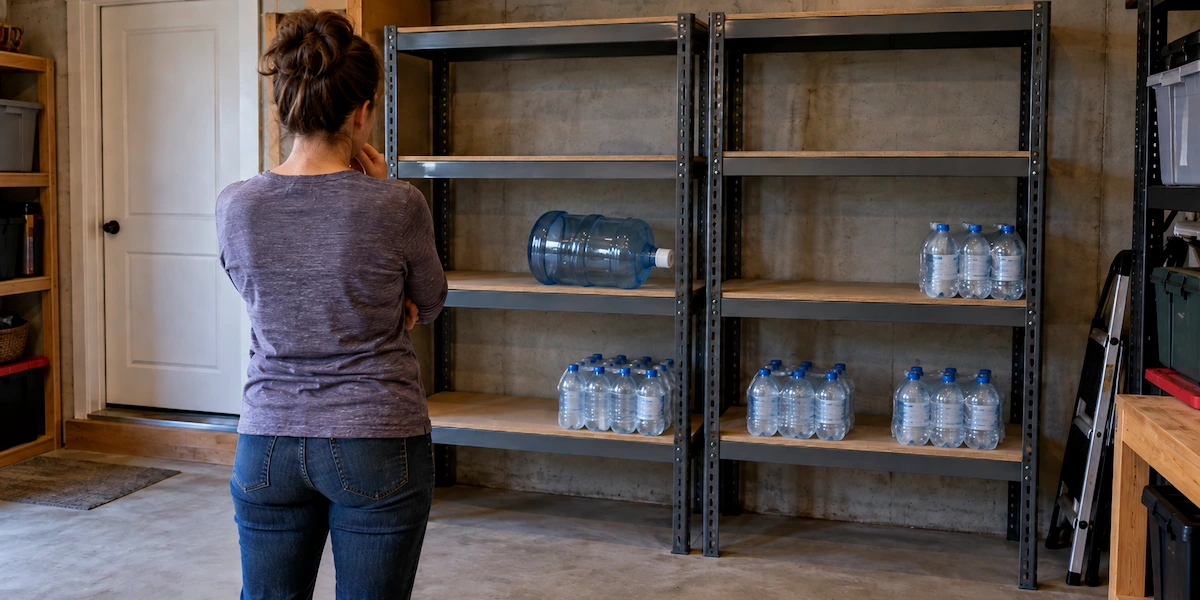
If your household is using that water every day, the number of gallons you have left keeps getting smaller.
At some point, you may find yourself asking a very practical question:
Where will our next water come from?
That question is why it's worth thinking about emergency water sources before you need them.
The good news is that you may have more options than you realize.
Some water may already be inside your home. Rain can become another source. Depending on where you live, lakes, streams, springs, or other natural sources may be available. There are also ways to collect or produce additional water.
But these sources are not all equal.
Some may be useful for drinking after proper treatment. Others may be better saved for flushing toilets, cleaning, or other non-drinking uses.
The goal is not to find one perfect emergency water source.
The goal is to know your options.
Start With the Safest Water You Already Have
When normal water service stops, your first choice should usually be the water you stored ahead of time.
Commercially bottled water that is still sealed is especially useful. The CDC calls unopened bottled water the safest and most reliable emergency water source.
That's another reason water storage matters so much.
When something first goes wrong, you don't have to wonder whether your drinking water is safe. You already have it.
But let's assume the interruption lasts longer than expected.
Your stored supply is starting to shrink.
Before heading outside looking for water, take another look inside your home.
You may already have water you haven't counted.
Look for Hidden Water Sources Inside Your Home
Most people think of the water coming from their faucets as their home water supply.
But when the faucets stop working, some water may still remain in the home.
Your Water Heater
A traditional tank-style water heater may hold many gallons of water.
Both the EPA and Washington State Department of Health identify water from a home water heater as a possible emergency water source. Proper steps are important, including turning off the electricity or gas before draining the tank.
How useful this source is will depend on your type of water heater and what happened to the public water supply.
The important point is simply this:
The water stored in your home may be more than the water sitting in bottles or emergency containers.
Knowing where that water is—and learning how your own equipment works before an emergency—can give you another option.
Water Remaining in Household Pipes
Water may also remain in your plumbing after the main supply is interrupted.
Washington State health guidance notes that water can sometimes be drained from household pipes by shutting off the incoming water supply and draining the plumbing into a clean container.
This may not provide a huge amount of water.
But during a shortage, even a few extra gallons can matter.
Ice in the Freezer
Don't forget about ice.
Ice cubes and other clean ice made from safe water can be melted and used.
EPA specifically lists melting ice cubes as another possible home emergency water source.
Again, this may not solve a long-term water problem.
But that's not the point.
Emergency water planning gets stronger when you stop expecting one source to do everything.
A few gallons here and a few gallons there can extend the life of the water you stored.
Rainwater Can Be Useful—But Don't Automatically Assume It's Drinking Water
If you live where rainfall is reasonably common, rainwater is an obvious replenishment possibility.
Unlike stored water, rain can replace at least some of what you've already used.
That makes rainwater especially interesting from a preparedness standpoint.
But collected rainwater should not automatically be treated as safe drinking water.
Water can pick up contaminants from the air, roofs, gutters, collection surfaces, storage containers, and other places before you ever use it.
Washington State health guidance lists rainwater as a possible emergency source, but recommends treating water from outdoor sources before drinking it.
So rainwater can be valuable without pretending it is automatically ready to drink.
It might be used for non-drinking needs, which helps protect your stored drinking water.
Or, with the right collection and treatment plan, it may become part of a larger emergency water strategy.
The important thing is to think through how you would collect, store, and treat it before you're standing outside in the rain looking for buckets.
What About Rivers, Streams, Lakes, Ponds, and Springs?
Natural water sources may seem like an obvious answer if you live near one.
And they can be useful.
EPA and state health guidance both recognize rivers, streams, lakes, ponds, and springs as possible emergency sources when safer water isn't available.
But this is where appearances can be misleading.
A clear stream can contain germs.
A peaceful lake can contain contamination you cannot see.
Surface water is exposed to runoff, animals, human activity, and other sources of pollution. Washington State's Department of Health warns that lakes, rivers, streams, and improperly protected springs can be vulnerable to bacteria, viruses, parasites, and other contaminants.
That doesn't mean natural water is useless.
It means finding water and having safe drinking water are not the same thing.
That distinction is worth remembering.
Water Treatment Matters More as You Move Away From Stored Water
The farther you move from properly stored drinking water, the more important treatment becomes.
The EPA recommends bottled or properly stored water first. When that is not available, boiling or proper disinfection may help deal with disease-causing organisms.
But there is an important limit.
Boiling does not remove everything.
Boiling and common disinfection methods can kill many harmful germs, but they do not remove contaminants such as many chemicals, salts, and heavy metals.
That means you should not look at obviously polluted water and assume:
“I can just boil it.”
If water has a strange odor, dark color, floating material, or suspected chemical contamination, look for a better source.
And if local authorities tell you a water source has been contaminated with chemicals, follow their guidance rather than assuming ordinary household treatment will solve the problem.
This is why a good preparedness plan includes both water sources and water treatment.
One without the other may leave you with fewer options than you think.
Not Every Gallon Has to Be Drinking Water
There is another useful way to stretch your emergency water supply:
Stop using your best drinking water for jobs that don't require drinking-quality water.
During a longer interruption, water may be needed for more than drinking.
You may need water for flushing toilets, basic cleaning, washing items, or other household needs.
If you have a source that is not appropriate for drinking but is suitable for one of those jobs, using it can help protect your safest water for drinking and food preparation.
That can make a surprising difference.
Imagine that you have 20 gallons of safe drinking water left.
If every household water need comes out of those 20 gallons, the supply disappears much faster.
If another source can handle some non-drinking uses, those 20 gallons can last longer.
Sometimes the best way to “find” more drinking water is simply to stop using drinking water where you don't need it.
A Better Question Than “What Is the Best Emergency Water Source?”
People often want one answer.
What's the best backup water source?
Rainwater?
A nearby stream?
A well?
A large storage tank?
Some kind of water-producing system?
The problem is that the answer depends on where you live.
Someone in a wet climate has different options from someone in a desert.
A rural household may have access to a well, spring, pond, or creek that an apartment resident does not.
Someone with a large property may have room for bulk water storage that a person in a small home cannot reasonably use.
That's why we prefer a different question:
Which emergency water sources are realistic for our household?
That question is much more useful.
It forces you to look at your actual situation instead of building a plan around someone else's.
Build a Small “Water Source Map” for Your Household
You don't need an elaborate preparedness binder to do this.
Take a few minutes and mentally walk through your options.
Start with your stored water.
Then think about water that may already be inside the home.
What could you collect outside?
Are there natural sources nearby?
Which sources would need treatment?
Which could be useful only for non-drinking purposes?
And which sources would still be available if the weather were dry, the power were out, or an interruption lasted several days?
You may discover that you already have three or four possible sources.
Or you may discover that nearly your entire plan depends on the water you've stored.
Either answer is useful.
The purpose of asking the question now is to find the gap before your stored water is almost gone.
Think About Reliability, Not Just Availability
A water source can exist and still be unreliable.
Rainwater depends on rain.
A stream can become contaminated.
A well may depend on electric power.
Stored water eventually runs out.
A water treatment device may require replacement filters.
No source is perfect.
That's actually a good argument for having more than one.
You don't need seven backup systems.
But having several realistic choices can give you much more flexibility than depending on one solution.
This is the heart of replenishment.
You are not trying to predict exactly what will happen.
You are simply making sure you have another move available if your first plan stops working.
There Is Another Source Most People Never Think About
We've talked about water stored in the home.
We've talked about rain.
We've talked about rivers, lakes, springs, and other natural sources.
But there is another place where water is present almost all the time:
The air around you.
Air contains water vapor.
Under the right conditions, that moisture can be collected and turned into liquid water.
The technology used to do this is called atmospheric water generation, or AWG.
It isn't a replacement for stored water.
It isn't equally useful in every climate.
It usually requires energy.
And water collected this way still needs to be handled and treated properly.
But as a replenishment idea, it is worth understanding.
The interesting question is not whether water can be collected from the air.
It can.
The more useful questions are:
How does it work?
How much water can it produce?
Where does it work best?
And could it reasonably fit into a home water plan?
More Water Sources Mean More Options
A strong emergency water plan does not depend on a giant pile of bottled water lasting forever.
It starts with storage.
Then it asks what else is available.
Maybe your plan includes water already inside your home.
Maybe rainwater makes sense where you live.
Maybe natural sources are nearby.
Maybe you can store more than you currently do.
And maybe a water-producing technology could add another layer.
You do not have to choose all of them.
You simply need enough realistic options that running low on stored water does not leave you asking:
“Now what?”
If you're curious about one of the less obvious replenishment options, take a look at our guide to atmospheric water generation. We'll explain in plain English how water can be collected from the air, what affects how much water you can get, and the important limits to understand before deciding whether it makes sense for your household.
Can You Really Get Water From the Air? How Atmospheric Water Generators Work